


ENGINEER FACTORY
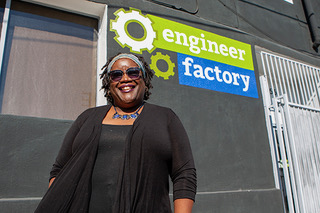
Q & A with Audrey Thompson, Founder and Executive Director
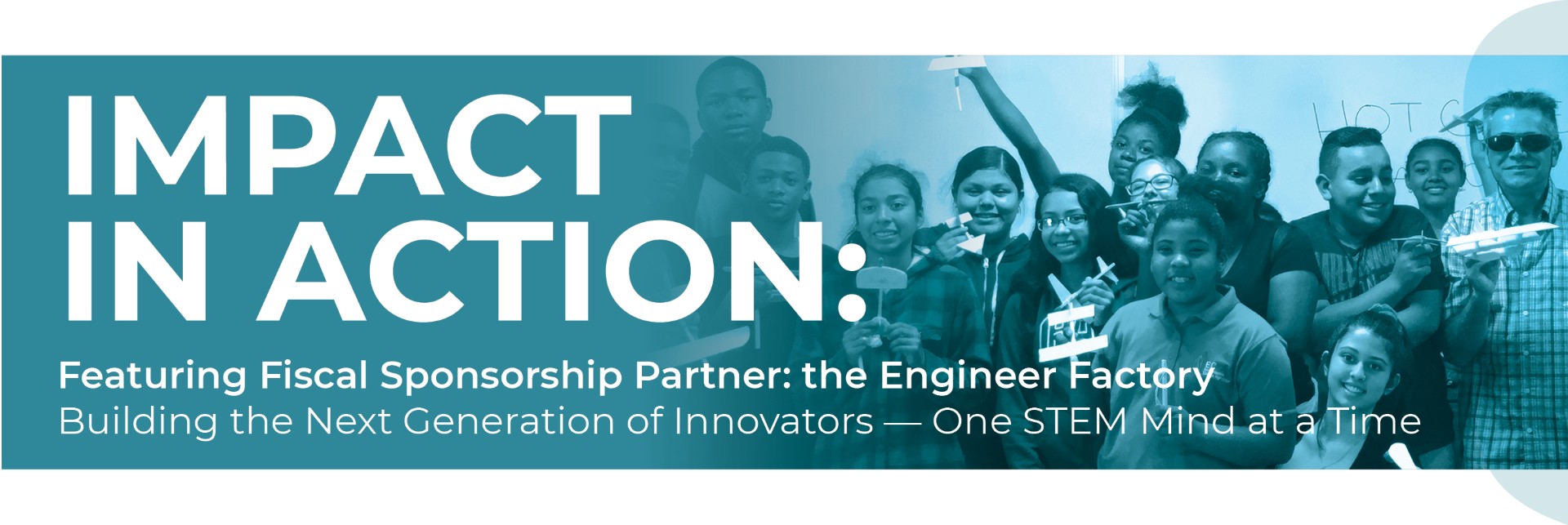
How the Engineer Factory Creates Confidence, Curiosity & Career Pathways
When Audrey Thompson talks about engineering, she doesn’t start with degrees or credentials. She starts with Cheerios.
Her journey began at home, raising a son who couldn’t stop taking things apart to see how they worked. What started as curiosity in their living room would eventually spark a movement to strengthen the STEM pipeline for thousands of students, increasing the number of students from underrepresented populations (girls and students of color) across South Los Angeles.
Below, Audrey shares how one child’s curiosity became a catalyst for change across the community.
What inspired you to start the Engineer Factory?
Our oldest son, Jaylen — now 31 — has always been a builder. As a child, he would take apart our house phones just to understand how they worked. We’d be searching the house for missing pieces whenever we needed to make a call!
His dad bought him a K’NEX set, and one day he built a “cage” for his three-year-old sister. That alone might have been enough to signal a future engineer — but then he installed a motorized lift that dropped Cheerios into the cage because, as he put it, “I had to feed the beast.” That’s when we knew.
When Jaylen attended Monroe Middle School in Inglewood, he joined MESA (Math, Engineering, Science Achievement). His teacher, Mrs. Genota, was extraordinary. She took her students — often the only Black and Brown competitors in the room — to regional STEM competitions. And they didn’t just participate. They won.
Competing against well-resourced schools from affluent communities gave those students tremendous confidence. Many of Jaylen’s peers went on to study engineering at UCLA, MIT, NYU, and Rensselaer Polytechnic Institute. We saw firsthand what access, mentorship, and opportunity could unlock.
When did you realize this could become something bigger?
My husband and I volunteered at competitions and hosted STEM projects at our home. Our backyard became the “STEM spot.” Soon we were leading hands-on projects for our daughter and her elementary school classmates — including a balloon-powered car activity that students loved.
The principal invited us back. Then, other schools called. Before long, we were contracted with eight schools.
In 2017, we officially launched The Engineer Factory and are proud to be a Fiscal Sponsorship
partner with Community Partners.
“Engineer Factory’s superpower has been our ability to establish strong, strategic partnerships. We are fortunate to be a part of Community Partners. Our partnership provides us with strong fiscal systems and a business back-end, allowing me to focus on programs and building programmatic relationships. Today, we’ve served more than 10,000 students through in-school, after-school, and summer programs.”
– Audrey Thompson, Founder & Executive Director, Engineer Factory
How has your vision evolved since founding the organization?
As we grew, we recognized a critical gap: there was very little year-round STEM programming available in South LA and surrounding communities. Students had moments of exposure — but not consistent access.
So we expanded our vision.
We opened the Engineer Factory STEM Center — what we proudly call the STEM GYM — to provide K–14 students with ongoing, hands-on learning year-round. In communities where opportunity can be limited, consistency matters. Access matters. Representation matters.
Our goal isn’t just to introduce students to STEM. It’s to create a continuous pipeline of confidence, competence, and career possibilities.
Because the next great engineer could be sitting in any classroom — they just need the tools, the mentorship, and the space to build.
Can you share a moment that illustrates the impact of your hands-on, equity-centered approach?
In 2022, after noticing that fewer than 10% of local high schools offered AP Computer Science, we partnered with Cal State LA to prepare students for the AP CS Principles exam. Of the 14 students who completed the course, 10 passed — earning college credit. Then, through donated parts and a partnership with Homeboy Recycling, students built their own desktop computers to take home. Many told us it was the first computer they had ever owned.
That’s the power of access — hands-on learning that builds both skills and confidence.
How do you successfully engage and retain girls and students of color in engineering pathways?
Representation and belonging are everything.
Our team reflects the students we serve, and we build authentic relationships — not just technical skills. We intentionally blend rigorous, hands-on engineering with culturally responsive activities that strengthen STEM confidence. We remind students that innovation is in their DNA.
We also prepare students — especially in middle and high school — to compete in regional competitions alongside more affluent schools. Those moments matter. When our students succeed in those spaces, it reinforces that they belong in STEM and helps combat imposter syndrome before it starts.
Most importantly, we consistently expose students to real-world applications and BIPOC STEM professionals so they can see a future that looks like them.
What’s next for The Engineer Factory — and how can partners help?
We’re expanding access to high-growth STEM fields — especially drone technology.
With support from Los Angeles County and other funders, we’ve trained 40+ elementary and middle school students from 12 schools to compete in the REC Aerial Drone Competition, and in March 2026, we will host a regional competition in South LA to increase access.
We’ve also launched a Drone Senior program for ages 16–25. More than 30 students have trained for the FAA Part 107 Commercial Drone Pilot exam, and 13 have already earned their licenses. This winter, we’re launching a drone flight school and building pathways to mentorship, careers, and even student-led drone social enterprises.
At the same time, we’re expanding after-school programming across LAUSD campuses in South LA. Partners can help by investing in these pathways — funding equipment, mentorship, internships, and entrepreneurial opportunities that turn access into careers.
Learn more about the Engineer Factory.
Next Post
Mindful Veteran Project Honored with International Wellness Award
February 19, 2026
Join our mailing list!
Keep up on the latest from Community Partners—our partnerships, learnings, grant opportunities, resources and more.